K-Beauty Routine for Beginners
The ten-step Korean skincare routine gets a lot of attention, and it puts many beginners off. Ten steps is the long version. The idea behind it is gentle cleansing, light layers of hydration, and sunscreen every day. You can start with four or five products and get the main benefit of the approach.
The idea behind K-beauty
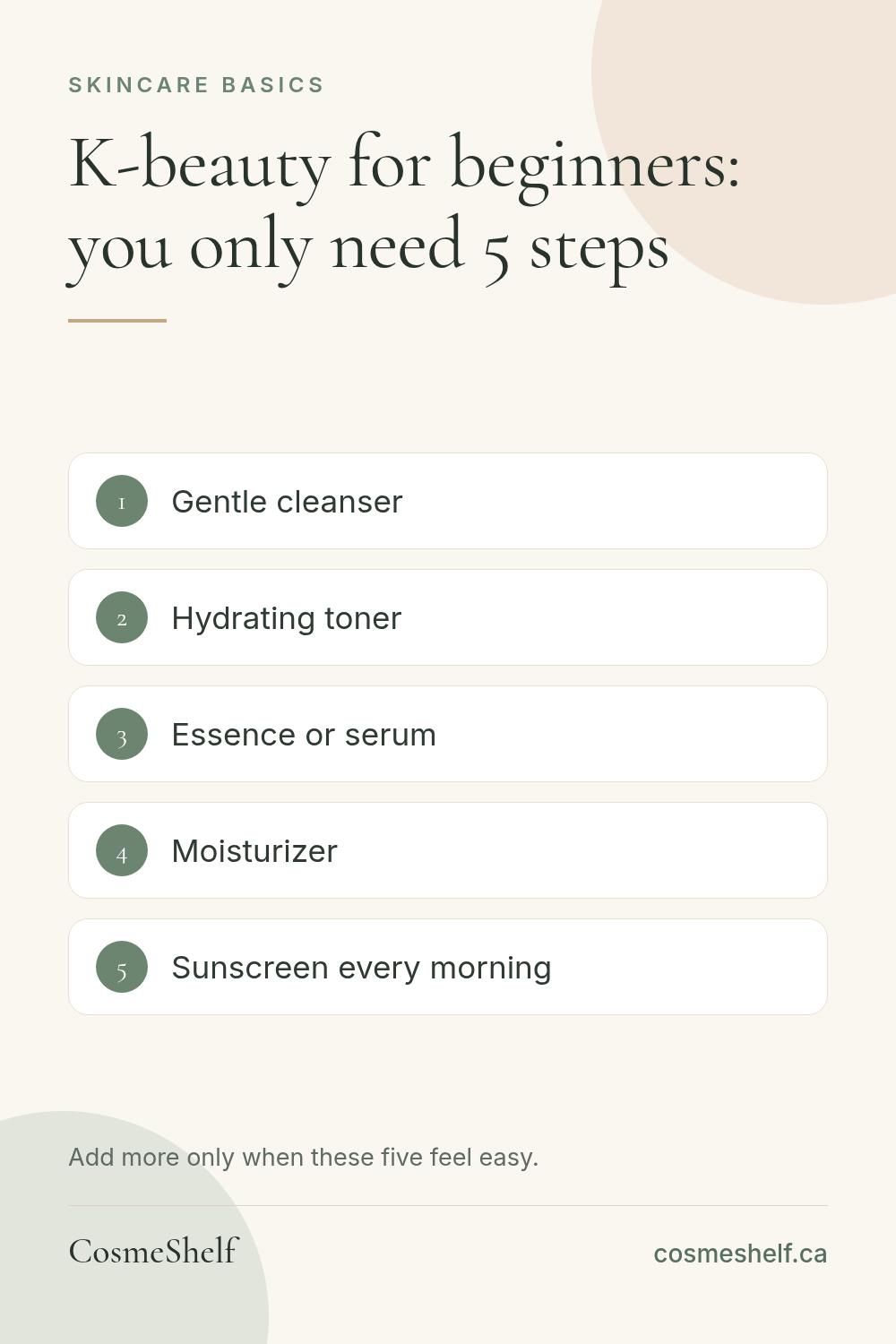
Korean skincare tends to favour light, hydrating layers over a single heavy cream, and looking after skin steadily over time. Products are layered from thinnest to thickest. Sunscreen is treated as a daily step all year.
A five-step starter routine
- 1. Gentle cleanser. A mild, low-foam cleanser that does not leave your skin feeling tight. In the evening, if you wore sunscreen or makeup, many people use an oil cleanser first and then the regular cleanser. This is called double cleansing.
- 2. Hydrating toner. Korean toners are usually watery and hydrating. Pat it in with your hands.
- 3. Essence or serum. An essence is a light, watery product that adds hydration. This is the step most associated with K-beauty. Choose one, not several.
- 4. Moisturizer. A gel type if your skin gets oily, a cream if it is dry.
- 5. Sunscreen, in the morning. This is the step Korean routines are strictest about.
That is a full routine. In the evening, skip the sunscreen and you are done.
What to add later
Once the basics feel easy and your skin is comfortable, you can add one thing at a time:
- A sheet mask once or twice a week.
- A treatment serum for a specific concern.
- A sleeping mask on nights your skin feels dry.
- An exfoliant once a week, if your skin tolerates it.
Leave a few weeks between new products. If something causes redness or breakouts, you will know which product it was. For the order to apply everything in, see the correct order to layer your skincare.
Common beginner mistakes
Buying the full ten steps on day one is the most common. It is expensive, and if your skin reacts you cannot tell what caused it. Starting several active ingredients in the same week is the second. The third is treating sunscreen as optional.
It is also easy to end up with more products than you can finish. K-beauty is fun to shop for, with new launches, minis and sets everywhere. Many of those products show a period-after-opening of 6 or 12 months on the pack. A drawer of half-used essences is money spent on products that will be past their date before you get to them.
Keeping a multi-step routine under control
A few habits help:
- Open one product per step at a time.
- Note the date you opened each one. Our guide to the PAO symbol explains how long each should last.
- Keep a list of what is in your routine, so you can see what you use daily and what just sits there.
- Finish what you have before buying a replacement.
You can do this on paper, or keep your products on a CosmeShelf shelf where each one shows its opening date and the time it has left.
Track your skincare with CosmeShelf
Scan, organise, finish. Never waste a bottle again.
Try CosmeShelf free — no account neededKeep reading
How to Read Cosmetic Batch Codes
What the little stamped code on your products means, and what it can and cannot tell you.
Skincare TipsCosmetic Expiry Dates vs PAO: What's the Difference?
Expiry date, manufacture date and the open-jar symbol each mean something different.
Skincare TipsHow to Find the Manufacture Date of Skincare Products
Where to look, what to type, and what to do when the date is hidden.